“It was a mix of privilege, excitement and a little apprehension for whatever the journey ahead might hold,” she says.
She had, of course, no idea the incredible forks in the road that journey would take.
That she would one day be creating a program that brought schools and industry together to support people experiencing homelessness. Or that she would help design pathways for First Nations youth to participate in the Culinary Olympics in Germany. Or that she would build a place-based culinary and leadership program for First Nations youth. Let alone find herself cooking with communities in the Central Desert.
“I would have said ‘you’re dreaming’!”
Cath, as she is known to almost everyone, is the founder of Prepare Produce Provide, a not-for-profit organisation linking classrooms with real kitchens and community tables across Western Australia, and a strong advocate for First Nations youth. She is an accomplished chef, a champion of # First Nations youth and their communities, and a multi-awarding educator whose accolades include the 2025 National Home Economics Teacher of the Year and, most recently, the Industry Leadership Award at the 2026 WA Good Food Guide Awards.
Her story is a remarkable one and it began, like so many good stories, with a girl who didn’t quite fit the mould.
Finding her place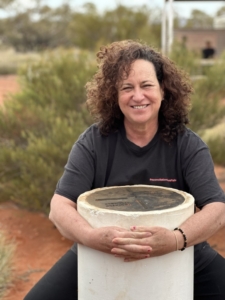
Growing up, Cath’s family moved constantly, rarely staying in one country for more than 18 months. The schools she attended in remote and foreign places didn’t exactly set her up for success in Australia’s mainstream education system. “It wasn’t easy to build confidence in my academic ability because we moved so much,” she says.
What she did have, though, was something that would stand her in good stead for the future: a deep, lived experience of food and culture from around the world.
At 18, still feeling she didn’t measure up in a system built for conventional learners, Cath headed north, working in hospitality in the Pilbara before finding her way to Geraldton TAFE, where she completed hotel catering and management. It was there that something clicked.
“I loved watching and learning and the networks, the friendships, the fact that I was out in industry, and I felt really connected to the training,” she recalls.
She began her food apprenticeship at 21, a little older than most and at a time when kitchens were overwhelmingly male. She worked in a Perth hospital kitchen before Burswood Casino (now Crown) asked her to complete her apprenticeship with them.
“I stepped into a world defined by creativity, dedication, excellence, challenge and relentless training – a world of events at Burswood Dome, Hopman Cups, margarine sculptures, pastillage, Salon Culinaire competitions, and the privilege of working alongside elite teams who set the standard at nothing less than excellence,” she says.
From the kitchen to the classroom
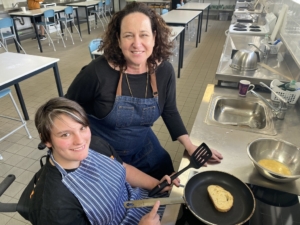
Eventually, the ever-curious chef made the transition to teaching, completing a degree in education, specialising in Home Economics. It wasn’t a smooth transition – she had accrued a mixed bag of professional qualifications and diplomas that weren’t recognised by the tertiary system, and entering that system brought its own kind of disorientation.
Cath pushed through with characteristic determination; the classroom giving her something she hadn’t quite anticipated: a mirror.
“As a teacher, I totally understand half the kids who come into my class because I know what it’s like not having the tools (to fit in),” she says. This natural empathy has helped her connect with young people, particularly those who sit outside mainstream education.
Prepare Produce Provide (PPP) was born out of a desire to reach more of those students. It began with 5000Meals, a program that brought schools together to cook for people experiencing homelessness.
“Young people often don’t recognise their own privilege, and I could see how food could be the bridge,” Cath says. “If we help another person, it makes us a little more humble.” And help they did. During the pandemic, when need was at its peak, the program produced more than 45,000 meals across 30 participating schools.
Listening and working alongside other educators with Aboriginal students, Cath realised she wanted to do something different. “I wanted to find a better way to connect with these young people – to step out of the classroom, look at the hurdles these students had and how we could incorporate culture, engage with producers and traditional foods.”
Enter Djinda Ngardak (“alive under the stars” in Noongar), a place-based culinary and leadership program for First Nations youth. Holistic in design, it weaves together art, music, dance and food, with culture at its core.
 Taking First Nations food to the world
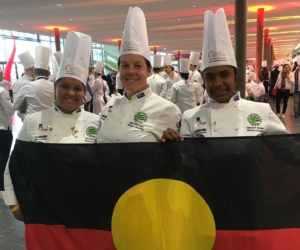
It was this program that pushed Cath even further. Working with a fellow educators, she helped design pathways for First Nations youth to participate at the Culinary Olympics in Germany – the first Indigenous Australians to do so.
The journey began with a borrowed bus and 15 Aboriginal students, a handful of passionate educators, five days of foraging and a connection with Jamie Oliver’s Restaurant 15 in London. “It created this anxiousness in me to get out in the world. Education and training to me is about playing – if you’re not having fun, you’re not doing it right,” Cath says.
The connections made in London led them to Terra Madre, the biennial Slow Food festival, where First Nations students shared their stories and bush food with food industry professionals from around the world.
This year, PPP is returning to Terra Madre in Italy and taking a group of young people to Vietnam for a cultural immersion program. The WA Secondary School Bush Foods Competition, where teams from across the regions vie for a spot in the nationals, has also had another successful year. Then there is the push to make Kepa Kwab, the non-alcoholic soda made in collaboration with students and industry professionals, a sustainable enterprise.
Coming full circle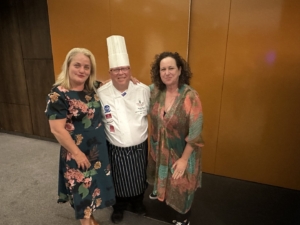
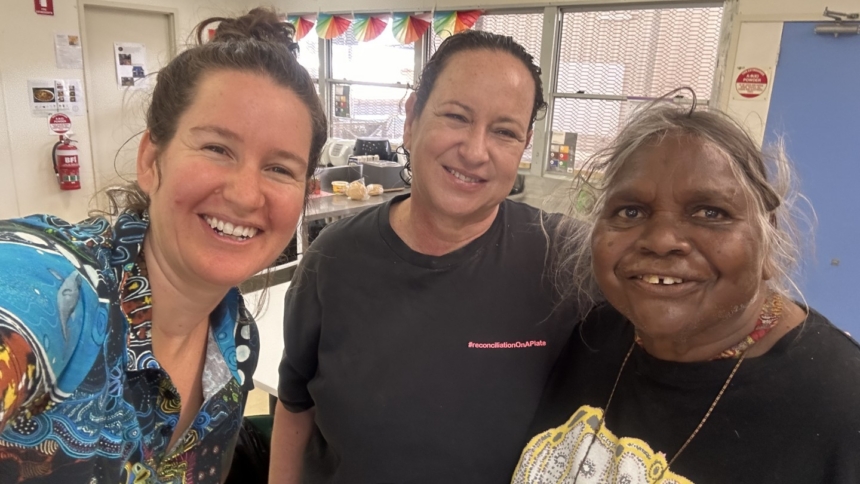
It’s hard to encapsulate the myriad experiences along Cath’s extraordinary journey, but she says some of her most meaningful work has been in the middle of nowhere. PPP runs a program in the Central Desert with eight communities ahead of their annual sports carnival. Like-minded chefs volunteer their time and skills to cook shoulder to shoulder with kids across the community, preparing thousands of pieces of food.
The ripple effects are tangible. A young woman who came through one of the programs seven years ago is now studying psychology. The educator who came on the first trip overseas is now leading the group to Terra Madre. Former participants have circled back to become part of the Wildflower Circle, supporters who head out into the Central Desert to help women create safe spaces. “It’s always full circle – it’s always about the cycle of giving.”
Though she was chuffed to receive the WAGFG Industry Leadership Award, Cath is driven by the “beautiful people” she has met and the changes they have made together. “It’s the efforts, encouragement and inspiration of so many that have carried me here,” she says. “It’s something quite magical to be part of, working with young people, with industry and with education. It’s a very unique, special space.”
And while she’s stepping back to let others take the reins at PPP, Cath is adamant the work will go on. “My hope is that we will continue building bridges between schools and industry, inviting young people to lead and strengthening the ties between food, culture, health and wellbeing,” she says. “Together we can keep creating unforgettable moments and nourishing communities with generosity, excellence and, of course, good food.”