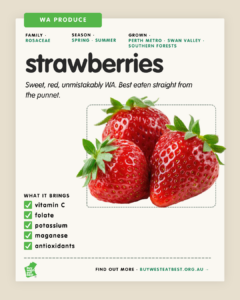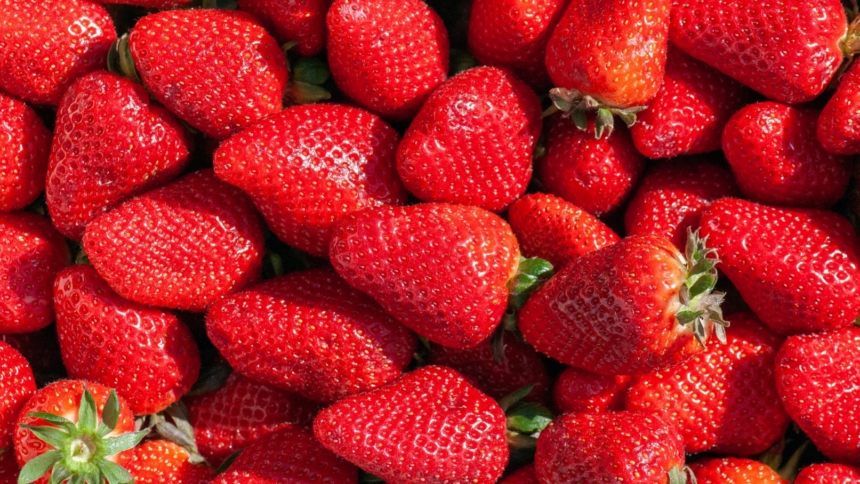
Let’s take a closer look at some of the stories behind the sensational strawberry.
A rose by any other name
It is actually a member of the rose family, Rosaceae, making it a cousin to apples, almonds, cherries and, of course, roses. Look closely at a strawberry flower and you might spot the family resemblance: five delicate white petals, arranged much like a wild rose in bloom.
In botanical terms, a true berry develops from a single flower with one ovary, such as grapes or tomatoes (yes, tomatoes are berries). The strawberry is an aggregate fruit, meaning it is made up of many tiny fruits – the tiny yellow specks on the surface, each one bearing a seed (called achene). A single strawberry can carry more than 200.
The low-growing perennials also make pretty additions to the garden, with a faint floral scent hinting at its rosy connections.
The strawberry spy
While wild strawberries have been around for centuries, they were favoured for their medicinal rather than culinary qualities. Ancient Romans used them to treat all manner of ailments from bad breath to inflammation, while European herbalists added them to tonics to treat gut issues. They were also ornamental additions to royal gardens, but the fruit was nothing like the variety we enjoy today.
This is where Amédéé-Francois Frézier enters the story. Sent by King Louis XIV to spy on the Spanish in South America in the early 18th century, he spotted large, pale strawberries growing in Chile (fragaria chiloensis). He smuggled them back to France, where they didn’t respond well to the conditions. As luck would have it, however, they were growing near another, smaller but intensely flavoured, strawberry (fragaria virginiana) brought back from North America and they cross-pollinated.
This happy accident resulted in fragaria x ananassa, a strawberry with the size and texture of the Chilean variety and the sweetness and resilience of the Virginian. The first hybrid strawberry was born, setting the path for commercially grown strawberries.
Sweet seasons
Strawberries have been grown in Western Australia for more than a century, with the sandy, free-draining soils around Perth proving particularly well suited to the crop. Bullsbrook, Wanneroo and Perth Hills remain production strongholds, with milder winters enabling growers to supply fresh fruit through the cooler months, though they are grown as far south as Manjimup and Albany and as far north as Carnarvon.
The strawberry season typically runs from late autumn through to summer, peaking during winter and spring when the fruit is at its sweetest and most abundant. The unusually long picking window also means farmers markets and supermarkets alike are packed with punnets or trays of red deliciousness for much of the year.
There’s nothing like picking them straight from the vine, either. A number of strawberry farms open up their fields come spring and invite visitors for a berry good day out.
Grown with love
Growing strawberries, on the other hand, is no picnic. Runners are planted each season to ensure high yields and quality, and to prevent diseases. The fruit is handpicked, often several times a week, to ensure only the best ripe berries make it into your punnets. This hands-on approach, along with WA’s clean growing conditions, gives local strawberries their reputation for flavour.
Established in the early 1990s, Berry Sweet began supplying strawberries to the local market from the family farm in Bullsbrook, just north of Perth. It has grown considerably over the years, adding raspberries, blackberries and blueberries across three locations.
While they have increased in size and distribution, Berry Sweet has maintained the philosophy that whenever they eat straight from their plants they know the fruit will be healthy and full of flavour. The family business also keeps a close eye on advances in horticulture and technology to ensure they deliver on quality year in, year out.
Strawberry flavours
Not every strawberry makes it into a punnet or tray, of course. Aside from being in demand at restaurants, cafés and hospitality venues, other local businesses snap them up to add to their roster of liquid delights.
Funk Drinks Co., the family business behind Funk Cider and Michael Brothers, crafts drinks using nothing but real fruit, without added sugar, preservatives, concentrates or sulphites. The range includes a refreshing Strawberry Lemonade, best enjoyed on a warm afteroon out at Funk Brewshed in the Swan Valley.
Down in the pristine Southern Forests, NewLeaf Orchard puts its own spin on strawberries. Known for cold-pressed apple juices and unfiltered vinegars, the orchard also produces a distinctive apple and strawberry blend, bottled fresh on the farm just outside Manjimup. It’s another lovely example of how WA’s superb strawberry crop flows into all sorts of products beyond the fruit bowl.
Dishing up strawberries
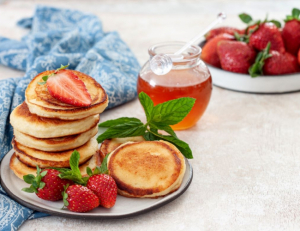
Ricotta strawberry pancakes
Strawberries are best eaten as they come. Rinse under water, hold on to the green stem and sink your teeth into the delicate balance of sweet and tart.
But they are very versatile and can be used in sweet and savoury dishes. Blitz them into a smoothie with yoghurt and banana for a quick, nourishing breakfast, or mix with lime juice and caster sugar for a super summer slushie.
Slice them in half and add to a chicken salad, reserving some for a nice vinaigrette. Or use them to dress up ricotta pancakes or a celebratory pavlova.
If you don’t want to make your own strawberry jam, find a preserve made with local strawberries at your nearest market and use it to fill these yummy shortbreads or pile atop lemonade scones.
Look for homegrown strawberries wherever you shop. A lot of hard work went into these rosy treats and the best way to show your gratitude is to support our growers.