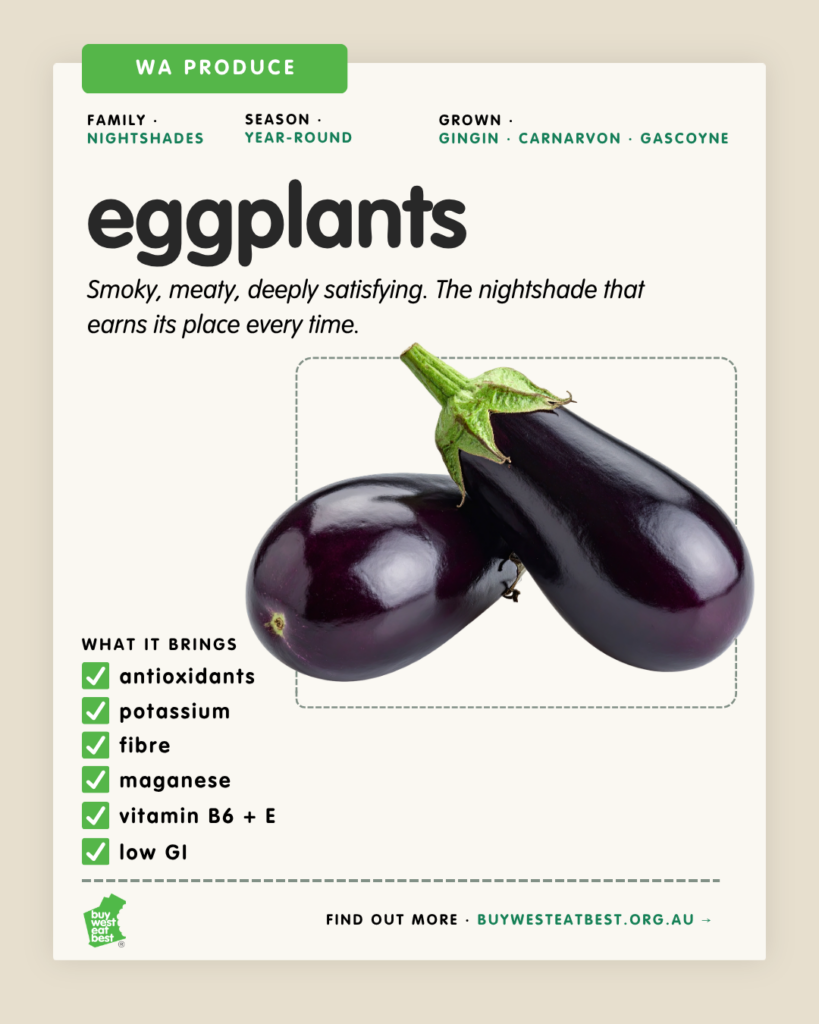
If you have read our guide to nightshades, you will already know that eggplant is botanically a fruit, though it is treated as a vegetable. It also belongs to one of the most diverse and historically significant plant families that also includes tomatoes, capsicum and potatoes. Originating in ancient India and China, Arab traders brought eggplants to North Africa and the Mediterranean, where they found even more fans.
Once the doubters learn more about eggplants, how to cook them and their health benefits, we’re sure even they will come over to the dark side.
Many shades of eggplants
The large, deep purple globe is probably the eggplant most home cooks are familiar with but it’s just the beginning. There is a world of varieties worth exploring, each with slightly different flesh, flavour and texture.
Japanese or Lebanese eggplants are long and slender with thinner skin and sweeter, more delicate flesh. They also cook quicker than their globe cousins. Thai eggplants are small, round and often pale green or white, their firmer texture making them ideal for curries where you want to keep a little bite. White eggplants are milder and creamier, with a little less bitterness than associated with the purple varieties. Striped varieties, teardrop shaped beauties sometimes called Listada de Gandia (refering to the stripes and their native Spanish city), are worth growing just for their looks (though they also taste good).
The word eggplant comes from the smaller white and yellow varieties, which early European growers noted resembled eggs hanging from the plant. In many parts of the world, however, they are still called aubergine after the Arabic name.
Making you feel good
Eggplant’s nutritional credentials are impressive; they are low in kilojoules and a good source of dietary fibre and potassium. If you can leave the skin on when you cook, you will get even more nutrients. The colourful casing comes from anthocyanins, the same group of antioxidants found in blueberries and red cabbage which research suggests can help protect against heart disease and certain cancers.
Eggplant also contains nasunin, a specific anthocyanin found in the skin that can protect cell membranes from damage during ageing. While it may not be marketed as a superfood, it more than earns its place at the table.
Get the best every season
Our varied climate rewards us with eggplants each and every season. Warm conditions around Perth and along the Swan Coastal Plain to Myalup in the South West are well suited to growing the nightshades through spring and summer, while growers further north cover the shortfall in the cooler months.
Trodan Produce, a fourth-generation family business based in Baldivis, is one of Western Australia’s leading grower-direct suppliers of eggplants. They grow, wash and pack everything themselves, meaning produce moves from paddock to shelf with speed, arriving fresh and at its most flavoursome. Through the winter months, Loveapple is among the growers in the Gascoyne to take over, using the region’s warm, reliable conditions to keep supply flowing well into spring.
We are so lucky to live in a State where one region picks up where the others leave off, with industry peak body vegetablesWA working to support growers wherever they may be.
Buying and storing eggplants
When you are at the supermarket, grocer or farmers market, look for eggplants that feel firm and heavy for their size with taut, glossy skin and a fresh green stem. Dull skin, soft spots or a shrivelled cap are signs that it has been sitting around for too long. Give the eggplant a gentle press to see if it yields before springing back. If it leaves a dent, move on.
Eggplant is best used soon after purchase, but it will keep for a few days in the fridge crisper. Just don’t cut it until you’re ready to cook as the flesh discolours quickly when it is exposed to air.
You also don’t need to salt and drain the modern varieties, as you may have seen your nonna or grandma do. Earlier eggplants were more bitter, which explains the traditional technique, but today’s cultivars are milder and can generally go straight into the pan.
Cooking with eggplants
Eggplant needs heat and it needs fat. If you try to cook it quickly over low heat or with insufficient oil, you’ll be disappointed in the pale, dense and spongy result. If you cook it properly, it almost melts, full of rich and savoury flavours.
Roasting is the most forgiving method. Halve the eggplant, score the flesh in a diamond, brush generously with olive oil and roast at high heat until the flesh is golden and soft all the way through. You can scoop out the flesh and fold it through yoghurt, garlic and lemon for a quick baba ghanoush; layer it with tomato sauce and mozzarella; or serve it as a tahini straight from the oven with a tahini drizzle.
For a more dramatic result, try cooking eggplant whole over a flame (gas burner or barbeque) or under a hot grill. Keep turning until the skin is completely charred and the inside collapsed. This technique is the basis for many of those smoky, creamy dips that can be found in Middle Eastern and Indian restaurants.
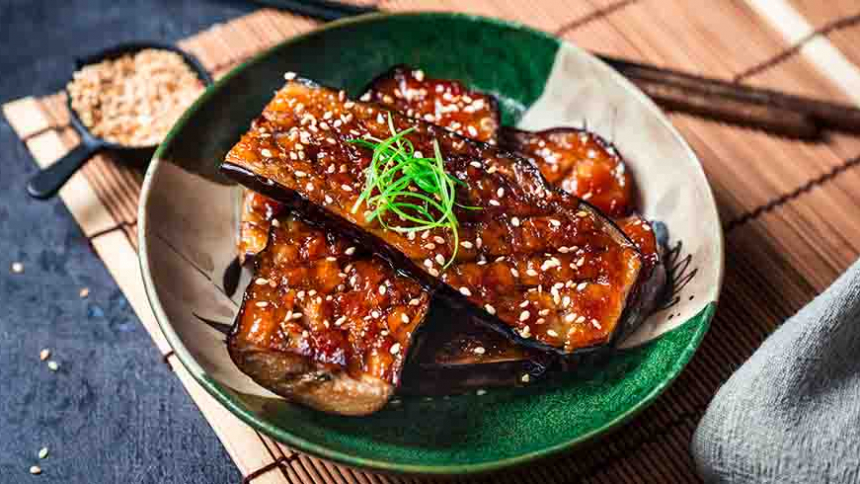
Sliced and pan-fried in olive oil, eggplant is the heart of the classic Sicilian pasta alla norma. For something more contemporary, try miso-glazed eggplant, where the salty-sweet lacquer caramelises beautifully under the grill. You can even add them to stirfries, such as this unusual eggplant, potato and capsicum dish.
No matter how you choose to cook eggplants, make sure to start with the best local varieties you can find. There is no shortage in WA.