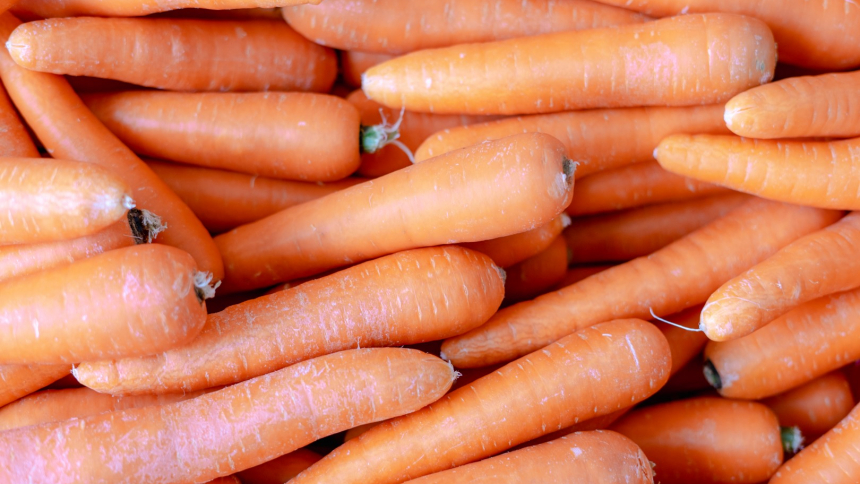
Just like those vegies, however, carrots are cooking essentials that punch above their weight in everything from curries and stews to cakes and salads. On top of that, they are packed with nutrients. Let’s give the humble carrot its moment in the sun.
Colourful carrots
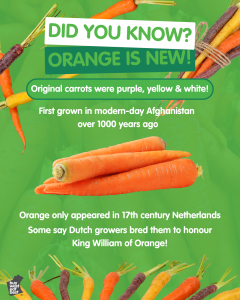
It may be the most common variety in our supermarkets and farmers markets, but the orange carrot is a relatively new addition to the fold. Grown in what is now modern-day Afghanistan about 1000 years ago, the earliest cultivated carrots were purple, yellow or white.
Orange carrots only emerged in the Netherlands in the 17th century, the result of growers cultivating sweeter and more uniform varieties, although some have suggested they were also paying tribute to King William of Orange. Regardless of the reason, the orange carrot’s popularity quickly spread.
Before the orange revolution, carrots were primarily valued for their fragrant leaves and seeds, which were used for medicine. The ancient Greeks and Romans alike recognised their digestive benefits, while medieval Europe used them as a sweetener before cane sugar became widely available. By the time carrots made it to Australia with the early settlers, they were a kitchen staple, prized for their hardiness, sweetness and shelf life.
Taking root in WA
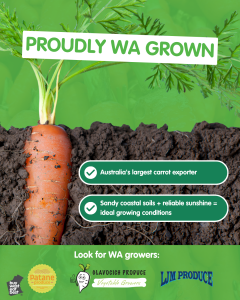
Western Australia is the nation’s largest carrot exporter, sending tonnes of orange sunshine to South East Asia and the Middle East. The long stretches of sandy coastal soil, reliable sunshine and varied climate – from the warm coastal plan to the cooler south – create ideal growing conditions year round, though they are at their peak in autumn and winter.
The bulk of production is concentrated just north of Perth in the Wheatbelt. This is prime carrot country, with loamy soils, reliable irrigation water and mild growing seasons making the region a major producer of the root vegetable. The main belt extends along the Swan Coastal Plain from Gingin, about 100km north of Perth, through the metropolitan area and down to Myalup in the South West, extending into parts of the Southern Forests and Great Southern.
Third-generation family business Patane Produce calls Myalup home. One of the state’s leading suppliers of carrots (among other vegetables), they grow, harvest, wash and pack onsite for delivery to Perth markets daily. Fellow growers LJM Produce, run by the Maiolo family for decades, are just up the road, bringing the same commitment to quality local produce. Closer to the city, Glavocich Produce, a second-generation farm on Perth’s southern outskirts, delivers fresh carrots and other seasonal vegetables direct to your door.
Why carrots are tops
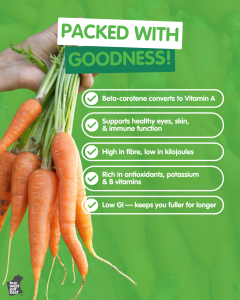
Carrots are laden with good stuff. They are probably best known for beta-carotene, the pigment that gives them their vivid orange and which converts to vitamin A in the body. This is essential for healthy immune function and skin, as well as eyesight. (So, there was some truth in granny telling you to eat carrots to help you see better.)
Carrots are also a great source of dietary fibre, vitamin K, potassium and several B vitamins. They are low in kilojoules and have a low glycemic index (GI), meaning they keep you fuller for longer.
But that’s not all. These beauties are packed with antioxidants, which help protect the body’s cells from damage, and their natural sugars provide energy without a dramatic spike in glucose.
Sample other shades
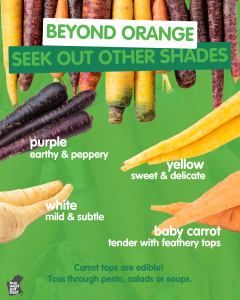
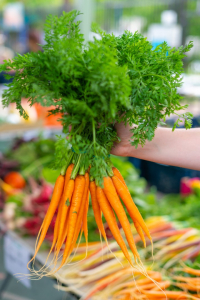
You can still find many other shades alongside more dominant orange carrots such as Nantes or Chantenay, including the original deep purple, sunshine yellow, pale white and candy-striped varieties that are almost too pretty to peel.
These tend to be more available at specialist growers or farmers markets, but they are worth seeking out. Aside from adding a little visual drama to a dish, they bring subtle differences in flavour from earthy and peppery to sweeter and more delicate. You can also grow your own if you have a green thumb – chat to your local nursery and see what varieties will grow best in your area.
Then, of course, there are baby carrots. The slender product of early harvest that arrive in markets and stores with their feathery tops still attached. And these leafy tops are edible, too. They have a slightly bitter, parsley-like taste and can be used in pestos, tossed through salads or stirred into soups or stews. Waste not, want not when you cook from root to leaf.
From raw to roasted
The carrot’s greatest gift is its versatility. This is a vegetable that moves from breakfast through to dessert, the lunchbox to the dinner table, with ease.
Eaten raw, they bring crunch and sweetness to slaws and salads. Grated into a WA-style coleslaw, alongside cabbage, fennel and spring onion, they add colour and texture. A few chopped carrots in the slow cooker are almost routine, elevating stews, curries and beef ragu. They also hold their shape beautifully in soups such as this hearty Italian kale and white bean soup.
Carrots shine when they are roasted, concentrating the sugars and caramelising the edges so they become almost jammy and burst with flavour. They are wonderful alongside a lamb roast with mint, stirred through a failsafe couscous, or adding sweetness to a roast vegie and egg salad.
Then there’s baking. Carrots make cakes and muffins moister, while their natural sweetness means you can ease off on the sugar. Who doesn’t love carrot cake?
Picking the right bunch
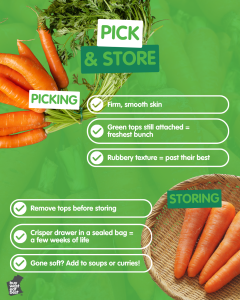
When buying carrots, look for firm, smooth skin without soft spots or cracks. If they are rubbery, they have been sitting around too long. If you’re lucky enough to find a bunch with their green tops still attached, that’s a good sign of freshness. Just make sure you remove them before storing as they draw moisture from the root, making the carrot soften quicker.
If you store them in the crisper drawer of the fridge, ideally in a sealed bag or container, they will happily keep for a few weeks. And if they soften a bit much, don’t throw them out – add them to soups and curries.
It’s clear the carrot deserves its place in our culinary canon. Grab a bunch or two today.